
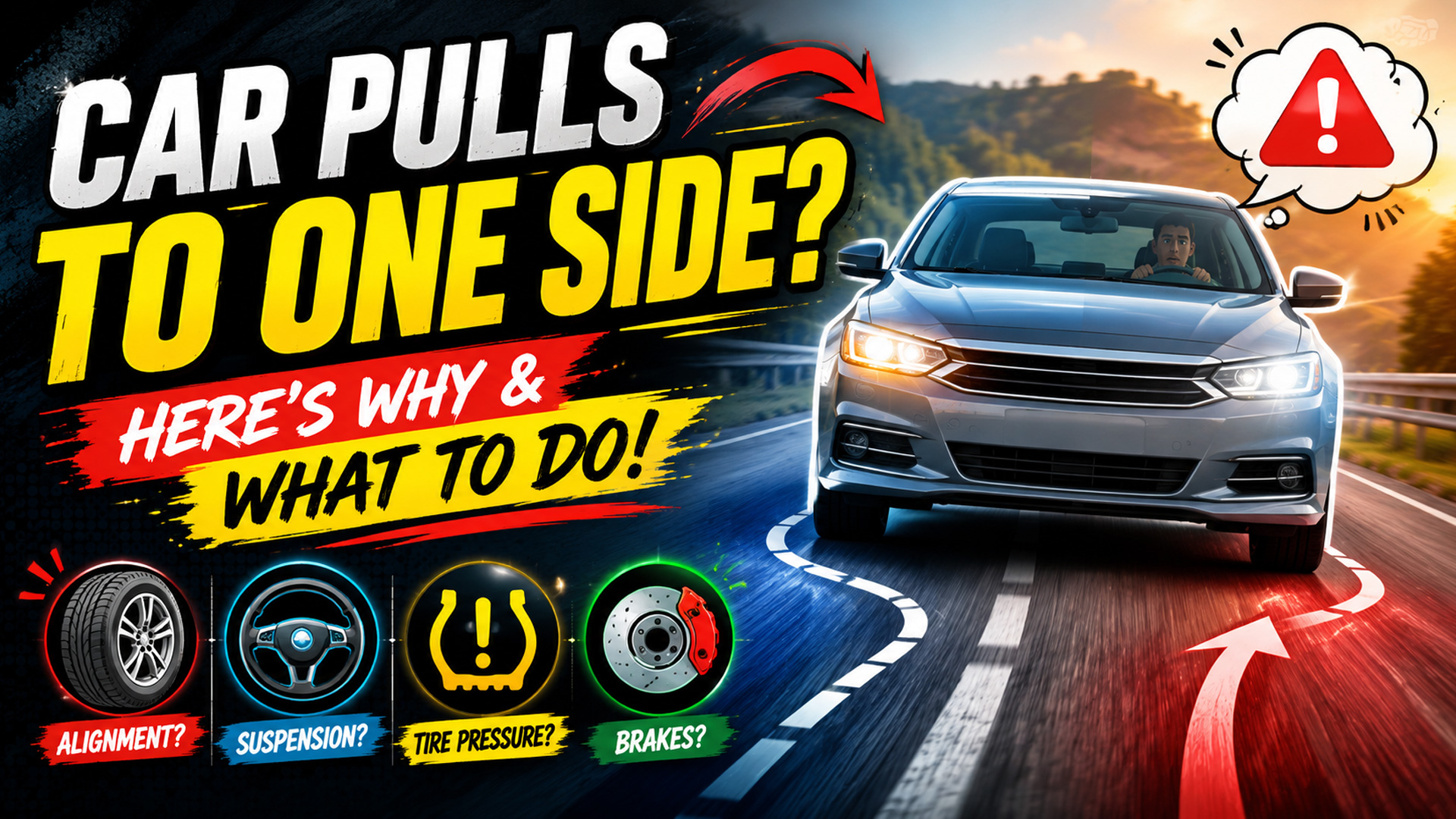
You’re driving, hands resting lightly on the steering wheel, and all of a sudden your car is gradually moving to the left or to the right. You fix it, however only a few seconds later, it is again. It is one of those things at which it is very easy to turn your back at first, but in fact, a car that is pulling to one side is a sign and if you ignore it, you will have a more expensive ride in a little while.
Well then, what is really happening? Let’s explain it simply.
It’s More Common Than You Think
Almost every driver has experienced this at some point. You’re not imagining it, and it’s not just the road camber (though that can play a small role). When your car consistently pulls in one direction, there’s an underlying mechanical issue at play — and there are a handful of common culprits worth knowing about.
1. Wheel Alignment Is Off
This is the most frequent reason cars pull to one side, and honestly, it’s one of the easier fixes. Wheel alignment refers to the angle at which your tyres make contact with the road. When those angles are out of whack — whether from hitting a pothole, bumping a kerb, or just normal wear over time — your car will start pulling toward the side that’s out of alignment.
You might also notice uneven tyre wear as a giveaway. If the inner or outer edge of one tyre is wearing down faster than the rest, alignment is almost certainly the issue.
The fix? A proper wheel alignment check. It doesn’t take long, and it’s something any reputable mechanic offering car service in Cabramatta can sort out for you quickly.
2. Tyre Pressure Differences
Many people get shocked when they learn this. A tyre with very little air pressure compared to others can cause drag on that side and hence make the car move in that direction. It is always a good idea to keep checking your tyre pressures regularly, especially if you are going on a long trip or when there is a sudden change in the weather (temperature changes affect tyre pressures more than most people realise).
It is quite convenient that you can do this yourself anytime when you are at a petrol station. However, if you notice your tyre continues to lose air on the same side, it is advisable to take it to a mechanic for a thorough inspection as the issue could be a slow leak or a faulty valve that you are unaware of.
3. Uneven or Worn Tyres
Even when the tires pressures are balanced, car pulling can be caused by worn tires, especially unevenly worn ones. If a tire has much less tread than the others, then its reaction to the road will be quite different, and this is likely to cause the car to pull.
Apart from that, it’s one of the reasons why frequent tire rotations are needed. Besides just helping your tires to wear evenly, regular tire rotations at your local car service in Cabramatta will also increase the time you can use your tires. It’s a small thing that makes a great difference.
4. Brake Issues
Here’s one that’s a bit more serious. If your brakes are sticking or a calliper is seized on one side, it can cause the car to pull — especially when you apply the brakes. You might also notice the car pulling more noticeably when slowing down, or even a burning smell after driving.
Brake problems aren’t something to sit on. If you suspect your brakes might be causing the pulling, get it checked out as soon as you can. A stuck calliper or worn brake pads aren’t just an inconvenience — they’re a safety issue.
5. Suspension or Steering Components
Your car’s suspension system is what keeps your tyres properly connected to the road. When parts like control arms, tie rods, or ball joints start to wear out, they can throw off the geometry of your steering — which often results in pulling.
This one’s a bit harder to diagnose on your own because the symptoms can mimic alignment issues. A good mechanic will usually do a visual inspection of your suspension components as part of a standard service to catch anything that looks out of place.
6. Torque Steer (Mostly on Front-Wheel Drive Cars)
If you drive a front-wheel drive vehicle and notice the pulling mostly happens when you accelerate, you might be dealing with torque steer. This happens when the drive axles aren’t equal in length, causing the engine’s power to be applied unevenly to the two front wheels.
It’s less of a “something’s broken” issue and more of a design characteristic — but if it’s gotten noticeably worse over time, it could indicate a worn CV joint or axle that needs attention.
Should You Keep Driving?
It depends on the seriousness of the issue. A small twinge which has been present for a while and hasn’t changed much is generally safe to keep an eye on for a short time, however, it still needs to be examined. If the symptom of pulling has arisen suddenly, is deteriorating, or is accompanied by other signs like vibrating, grinding noises, or the car jerking when braking, stop and if necessary call for a tow.
It is your safety on the road that counts most, rather than trying to save a little time or money in the short term.
When to Book a Service
To be frank, if your vehicle keeps drifting to one side, then it is the right time to get it checked out. Most of the problems highlighted above such as wheel alignment, tyre wear, brakes, and suspension are things that get checked during a thorough car service. Discovering them early almost always leads to a cheaper and easier repair.
Our team at trusted car workshop in Cabramatta would find a local workshop that can offer you a deep inspection rather than just a quick oil change. Make them check your wheel alignment, tyre condition and pressures, brake components, and suspension, this is especially important if you have experienced pulling, vibrating, or uneven tyre wear.
Conclusion
A car that pulls to one side isn’t just annoying, it’s a sign something needs attention. The causes range from simple (tyre pressure) to more involved (suspension components), but none of them are things you want to leave unchecked for too long.
Staying on top of your car’s maintenance is one of the best things you can do to keep it running safely and avoid costly repairs down the line. If you’re unsure what’s causing the pull, the best starting point is always a proper inspection from a mechanic you trust.
Don’t ignore the drift, get it sorted before a small issue turns into a big one.