
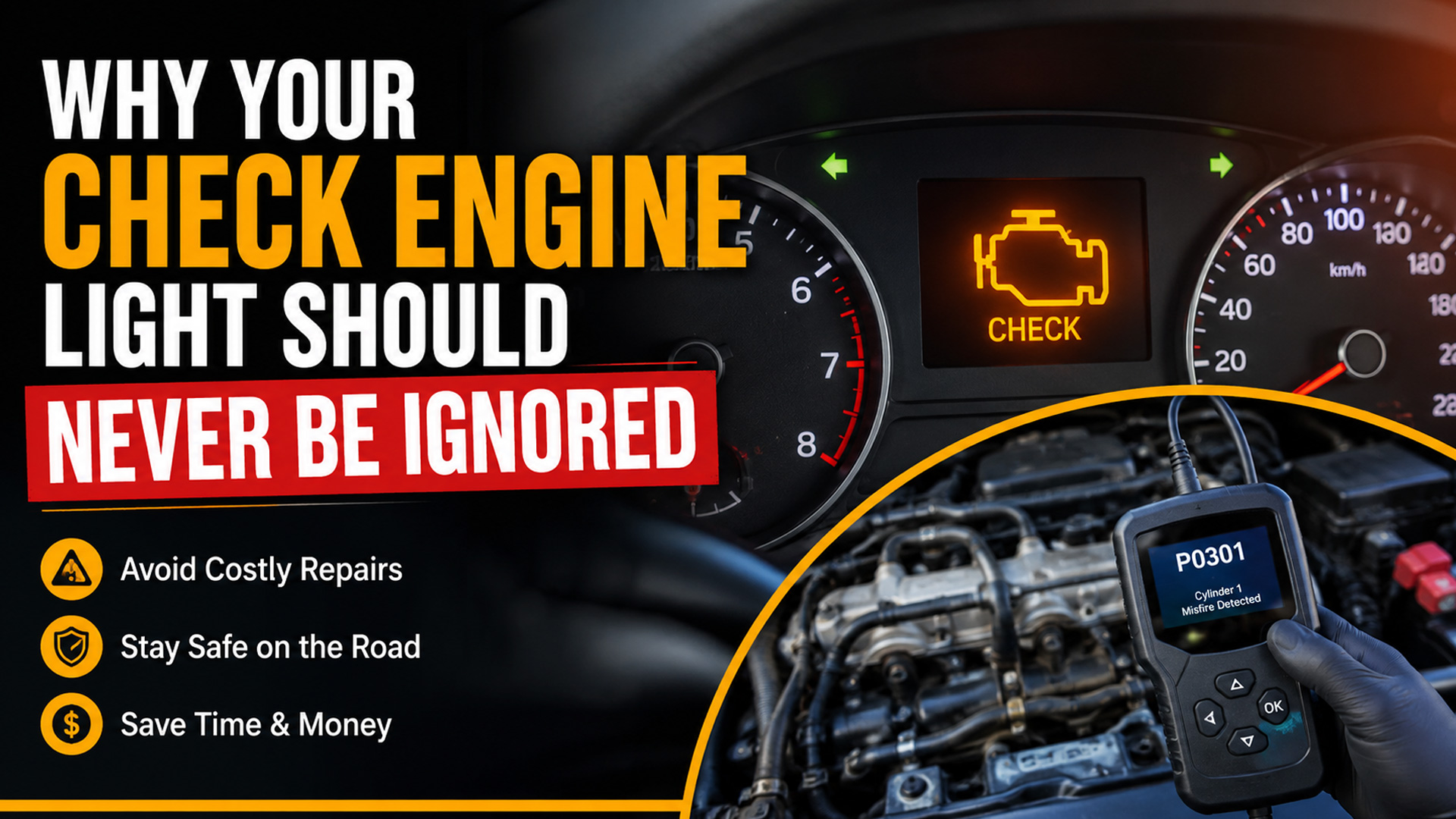
Most people have done it at least once.
You’re driving along, everything feels normal, and then that little orange engine-shaped light pops up on the dashboard. You glance at it, hope it disappears on its own, and keep driving because the car still “feels okay.”
A few days later, the light is still there.
Then maybe the car starts using more fuel. Maybe it struggles a little when accelerating. Maybe it begins making a strange noise you swear wasn’t there last week.
That tiny warning light is rarely random.
Your vehicle is built to warn you before a problem becomes serious, and ignoring that signal can lead to repairs that cost far more than they should. Mechanics hear it all the time: “I thought it wasn’t urgent.”
If you’ve been putting off a visit to a Car Mechanic in Fairfield, it’s worth understanding why that dashboard light deserves attention sooner rather than later.
Your Car Is Basically Talking to You
Modern vehicles are smarter than many drivers realize.
Under the bonnet, dozens of sensors constantly monitor how the engine, fuel system, ignition, and emissions are performing. When something stops working properly, the computer records a fault and switches on the check engine light.
Sometimes the issue is minor.
Other times, it’s the beginning of something that can seriously damage the engine if left alone.
That’s the frustrating part — you usually can’t tell which one it is without a proper inspection.
The Problem Might Be Small… or It Might Not
People often search online hoping the answer is simple.
And sometimes it is.
A loose fuel cap can trigger the light. So can old spark plugs or a faulty sensor. These are fairly common fixes and usually manageable if caught early.
But the same warning light can also point to:
- Engine misfires
- Fuel injector issues
- Transmission faults
- Catalytic converter damage
- Ignition system problems
- Airflow sensor failures
That’s why guessing rarely works.
Two cars can show the exact same warning light while having completely different problems underneath.
Waiting Usually Makes Things More Expensive
Here’s the part many drivers learn the hard way.
Cars rarely repair themselves.
A small issue inside the engine often places extra strain on other components. What begins as a relatively affordable repair can slowly snowball into a major mechanical problem.
A worn spark plug, for example, may eventually damage the catalytic converter if ignored for too long. That repair bill is significantly larger than replacing spark plugs early.
The same goes for fuel system issues, overheating problems, or ignition faults.
The longer you drive with unresolved problems, the more expensive the outcome can become.
Fuel Economy Often Gets Worse First
Many people don’t connect rising fuel costs with engine trouble.
But when sensors stop reading correctly or the engine struggles to burn fuel efficiently, your car starts consuming more petrol than normal.
You may notice:
- More trips to the petrol station
- Reduced acceleration
- Sluggish engine response
- Rough idling at traffic lights
These changes often appear gradually, which is why drivers sometimes overlook them until the problem becomes impossible to ignore.
A Flashing Check Engine Light Is Different
A steady check engine light is a warning.
A flashing one is closer to an emergency.
When the light flashes continuously, it often means the engine is misfiring badly enough to damage critical components. Continuing to drive in that condition can create severe engine damage within a short period of time.
That’s the moment to stop driving and contact a professional immediately.
An experienced Car Mechanic can diagnose the issue before it turns into a complete breakdown.
Modern Cars Need Proper Diagnostics
Years ago, mechanics could often identify problems purely by listening to the engine.
Today’s vehicles are far more complex.
Most cars now rely heavily on electronic systems and onboard computers, which means proper diagnostic equipment is essential. A warning light might relate to one faulty part — or several connected systems working incorrectly together.
Professional diagnostics help pinpoint the actual cause instead of replacing parts through trial and error.
That saves time, money, and frustration.
Your Car Usually Gives Other Clues
The warning light itself is only part of the story.
Vehicles often show additional symptoms before bigger failures happen.
You might notice:
- Strange smells
- Shaking while driving
- Delayed acceleration
- Hard starting in the morning
- Unusual engine sounds
- Smoke from the exhaust
Drivers often dismiss these signs because the car still technically runs. But small warning signs are exactly what help prevent large repair bills later.
Ignoring It Can Leave You Stranded
One of the biggest risks is simple inconvenience.
Cars rarely break down at a convenient time.
It happens during school drop-offs, late-night drives, work commutes, or weekend trips. A problem that could have been handled during a routine inspection suddenly becomes a tow truck situation on the side of the road.
That’s why early action matters.
Conclusion
The check engine light is easy to ignore when the vehicle still seems to drive normally. But that little dashboard warning is there for a reason.
Sometimes the fix is simple.
Sometimes it prevents serious engine damage.
Either way, dealing with the problem early almost always costs less, causes less stress, and keeps your vehicle safer to drive. If the light stays on, getting your car checked by a trusted Car Mechanic Fairfield is one of the smartest decisions you can make before a small issue becomes a major repair.