
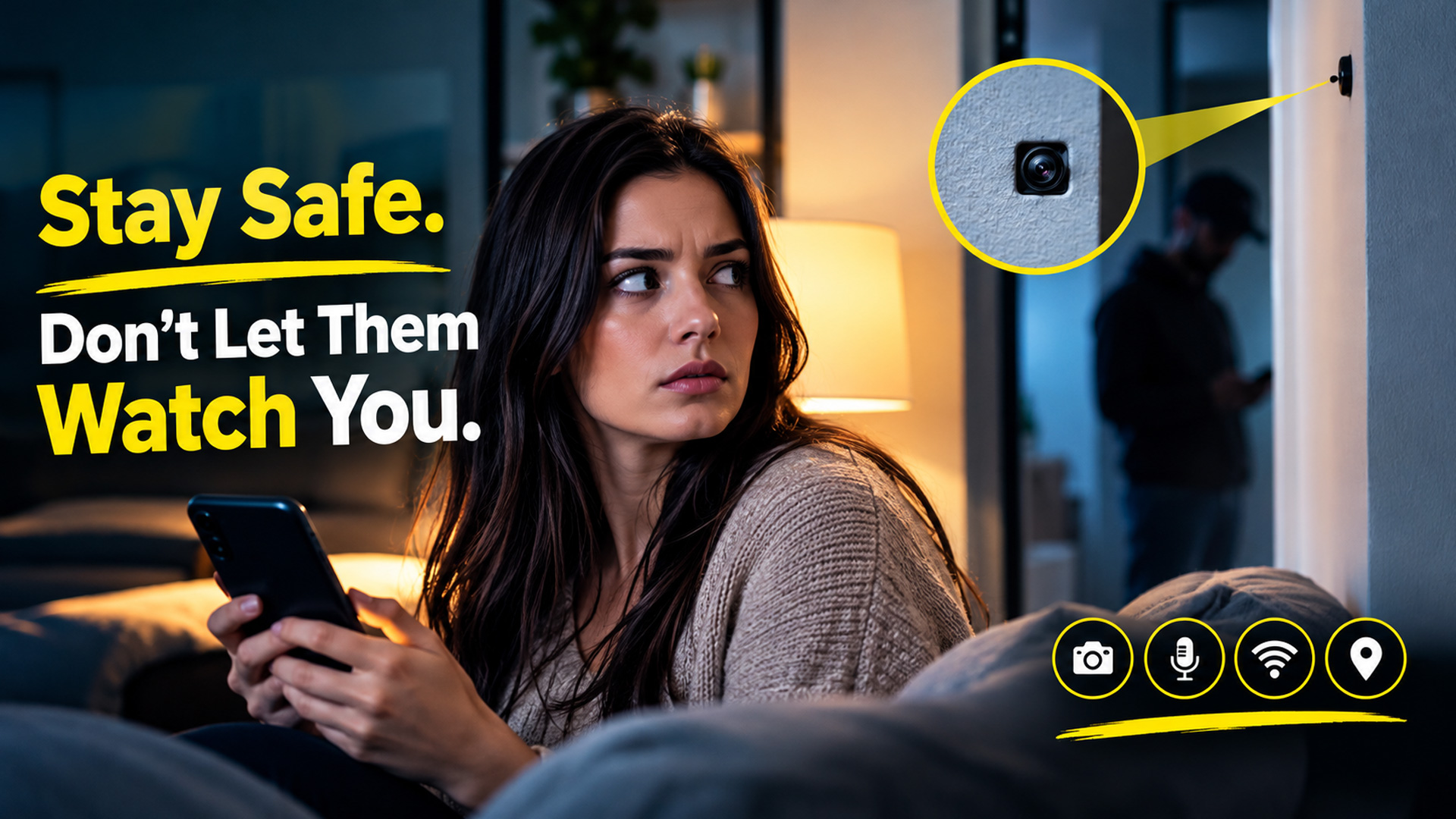
The Booking Is the Risky Part
Most people think the toughest part of a confrontation with surveillance is to locate the device. In a large numbers the real challenge is making a request for a help while remaining unnoticed.
If someone has had access to surveillance of your phone, been listening to you at home or followed you by a car, they may have the opportunity to see not only what is displayed on the screen of your device but also who you call and which e-mails you open. A message about the possible presence of surveillance to a security company sent from the wrong phone could unravel all of your plans done very carefully for weeks. Besides, that might be a threat to you as a person who loses her/his control, tends to react in a way that cannot be predicted at all.
This is why the method you choose to get a check-up is almost as vital as conducting it yourselves. Here we show you the step-by-step method of thinking before you get down to picking up the phone. Most parts of it are straightforward, however you will find your path to be very smooth, if you get prepared before the need comes.
Start With a Device They Have Never Touched
The single most useful step is to make contact from something the other person has never had their hands on.
That could be a phone belonging to a trusted friend or family member, a computer at a public library, or a new prepaid phone bought with cash and kept away from home. If you use a library or a friend’s phone, don’t log in to any of your own accounts while you’re on it. Logging in can link that device back to you.
Your everyday phone may be fine. It may also be the very thing being monitored. Spyware, a shared cloud account or a simple family plan with a visible call log can all give someone a window into what you’re doing. If you aren’t sure, treat it as unsafe until a professional says otherwise.
Think About What Leaves a Trail
Surveillance does not rely only on spy microphones. A large amount of monitoring is based on digital habits.
Before you contact anyone, think about where a record of the conversation might end up:
- Browser history and autofill suggestions on shared devices
- Email accounts that other people can open, or that sync to a shared tablet
- Text messages that show up on a linked watch, laptop or family iPad
- Call logs and itemised phone bills
- Calendar invitations, which can appear on shared calendars without warning
If the person monitoring you has any of those, a booking confirmation could be the thing that gives you away. Ask the company to confirm details by phone only, and to avoid sending texts or emails to an address you can’t be sure is private. A good provider will understand this without needing it explained.
Choose a Safe Place to Talk
Whoever gets involved with the conversation can make a difference. Don’t bring up the possibility of an electronic eavesdropping device being installed in your home or car if that is what you think the case is. A concealed microphone will be as effective in collecting a whispered conversation as if shouting.
Select a location where you are certain you will not be overheard. Consider your friend’s house, a busy café, a quiet park, or even your place of work. Just keep the call short and to the point: let the person on the other end know your name, what it is that makes you anxious, and suggest a time where a face-to-face meeting would be safe.
If your friend has a habit of finding out where you have been, choose a place which your friend won’t even think of questioning. The regular places where you go are more or less overlooked as opposed to places you have never been.
Don’t Change How You Behave at Home
This one is hard, and it’s very important. Once you suspect you’re being watched, the temptation is to go looking yourself, tear apart a lamp or announce that you’re checking your car. Please resist that.
If a device is there and the person responsible notices you’ve become suspicious, they may remove it, destroy the evidence or escalate their behaviour. A professional sweep is far more useful when the setting looks normal right up until the technician arrives.
Keep talking, calling and moving about as you usually would. Save the sensitive conversations for outside the home. If you do find something by accident, leave it where it is, take a note of what you saw and where, and contact a professional rather than removing it. Moving or switching off a device can destroy information that a technician, a lawyer or the police may later want.
What a Professional Sweep Actually Involves
The proper TSCM debugging and bug sweep is not just a quick wave of a handheld device. It consists of the following steps: check for signals from transmitting devices, check for the electronic circuitry, check for cameras and tracking devices, check for the locations where devices are usually hidden such as the electrical outlets, furniture, cars and other belongings.
Because this work happens in your space, timing matters. Many people arrange the sweep for a time when the person they’re worried about is away. Others ask for the work to be done somewhere else entirely, such as having a car brought to a neutral location instead of being inspected in the driveway.
Be upfront about your situation. You don’t need to share every detail, but telling the provider that safety is a concern lets them plan around it. That might mean unmarked vehicles, flexible appointment times or simply arriving without announcing why they’re there.
Think about actions in advance if Something Is Found
It is wise to think ahead, before making the round, about what action you’ll take in case a device is discovered. Discovery of such a device, however, could bring about relief as well because it’s just you and your suspicions being proved right. On the other hand, discovery can also be rather distressing and quite soon you will find that you are under pressure to make a rash decision.
Talk through the next steps with the provider first. Ask how findings are documented, how photographs and notes are kept, and whether a written report can be provided. That kind of record may be useful if you later speak to a lawyer, a support worker or the police.
You Don’t Have to Do This Alone
Booking a sweep can feel like a huge step, especially if you’ve been second-guessing yourself for a long time. Wanting to check is a reasonable response to a situation that doesn’t feel right. You don’t need to prove anything before you ask for help.
Take it one step at a time: use a safe device, pick a safe place, keep your routine steady and ask the provider how they protect your privacy. Done carefully, a TSCM Debugging & Bug Sweep can give you something that’s often missing in these situations, which is clear, factual information about what’s really going on.
Frequently Asked Questions
Can I book a bug sweep if my phone might be monitored? Yes, but do it from a different device. Use a trusted person’s phone, a public computer or a new prepaid phone, and avoid logging in to your own accounts.
Will the person watching me know I’ve booked a sweep? Not if you take precautions. Avoid emails, texts and shared calendars that they can see, and ask the provider to confirm details by phone only.
Should I look for the device myself first? It’s usually better not to. Searching can alert the person responsible, and moving or removing a device may destroy evidence. Leave anything you find in place and contact a professional.
Where should a sweep take place? That depends on your situation. A home sweep is often arranged for a time when the other person is away, and a vehicle can sometimes be inspected at a neutral location.