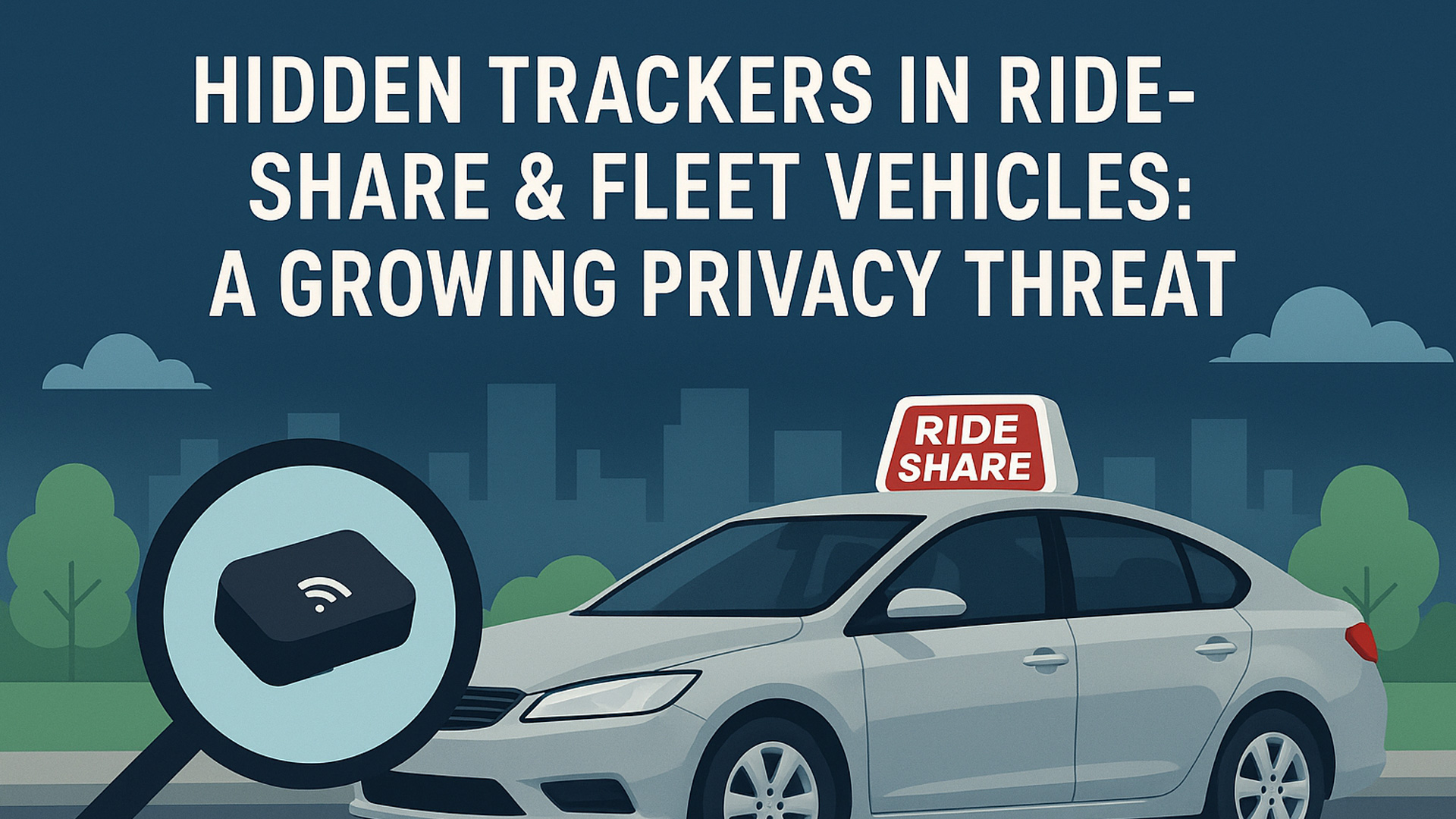
Ride-share services and commercial fleets have revolutionized the way individuals and companies move around. From Uber and Ola drivers to delivery vans and corporate fleets, the vehicles are now smarter, more connected and hence more vulnerable to security breaches. One of the quickest rising yet least talked about risks is the use of hidden tracking devices placed without consent inside vehicles, thus threatening the privacy and security of individuals.
With technology becoming cheaper and easier to hide, unauthorized vehicle tracking is no longer restricted to those with a high-profile. Everyday car owners and business operators are becoming targets.
Why Ride-Share & Fleet Vehicles Are High-Risk Targets
Ride-share and fleet vehicles are at risk particularly because of their frequent use by multiple people. The vehicle can be accessed by drivers, passengers, technicians, subcontractors, etc., thus providing several opportunities for installation of a device without permission.
Frequently hearing factors include:
- Cars driven by several persons
- Third-party maintenance regularly
- Long hours of operation daily
- Schedules and routes that can be predicted
Trackers get used for legitimate fleet management purposes but later become abused by their users. The situation exists where devices get installed covertly to spy on people without their permission.
Who Is Installing These Trackers?
Some of the hidden trackers could be placed by:
- Ex-partners or disgruntled employees
- Competitors tracing business movements
- Stalkers or criminals targeting the driver
- Data collectors looking for movement patterns
- Users misappropriating personal tracking gadgets
When these devices are placed, the captured data can reveal very sensitive information which includes the house location and daily activities of the residents and the delivery routes that transport high-value items.
Privacy and Safety Impact
Being tracked without permission penetrates one of the deepest levels of privacy. Besides, it can also be an immediate threat to the safety of a person and the running of a business.
Main dangers are:
- Stalking or harassing the driver
- Theft of cargo and hijacking of the route
- Corporate spying
- Confidentiality of clients’ information breached
- Fleet owners facing legal problems
Ride-share drivers are also at risk as their trackers remain active even if the vehicle is parked at home when they are not working.
How a Vehicle Bug Sweep Finds Hidden Trackers
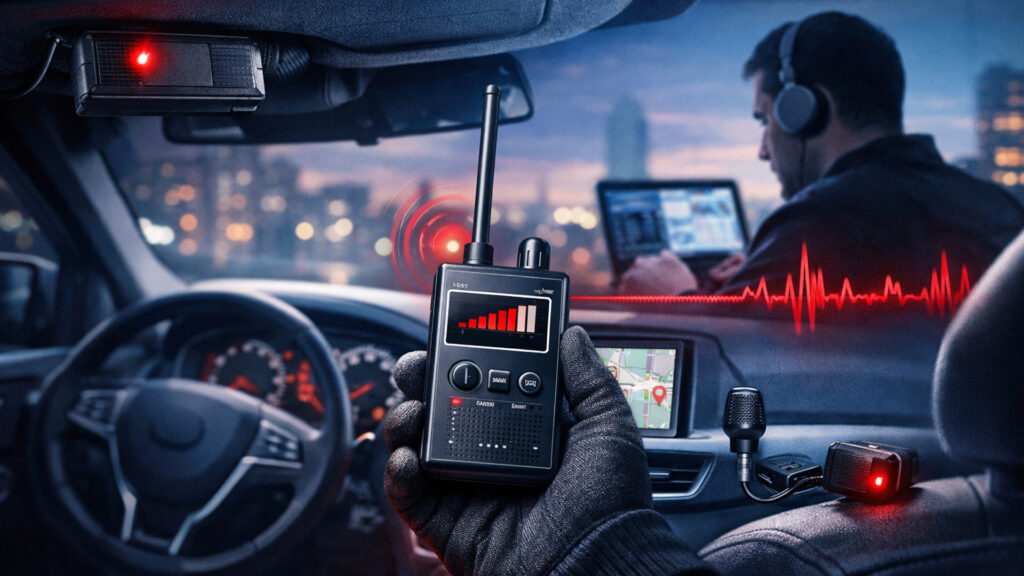
A professional Vehicle Bug Sweep is an inspection to find and uncover hidden tracking and surveillance devices in vehicles. It involves the use of sophisticated electronic detection devices to locate:
- GPS tracking devices
- RF (radio frequency) transmitters
- Bluetooth and cellular trackers
- Hard-wired listening devices
In addition to a mere naked eye, trails of digital deception can reveal to trained eyes secret gadgets that remain unnoticed until the opportune moment arrives.
When Should Fleet Operators and Drivers Be Worried?
Give a professional inspection a thought if:
- You have noticed unusual battery drain
- Vehicle electronics are acting strangely
- Your routes or schedules have been leaked
- You have had a quarrel or a security threat
- You perform sensitive or high-value operations with the vehicles
Detecting threats before they happen is always more effective than dealing with a breach after it has occurred.
Conclusion
With vehicles getting more and more connected, the threat of secret surveillance devices will only increase. It is essential for ride-share drivers and fleet managers to take care of vehicle privacy the same way that they look after digital data security.
Routine Vehicle Bug Sweep checks and occasional TSCM Bug Sweep evaluations offer security, protect the drivers, and keep business operations safe from silent tracking devices.
In the present world where movement data is the source of power, there has never been a greater need to make sure that your vehicle is completely private.